Crossword 11: Build Better Puzzle Books That Sell
Puzzle books have a quiet staying power that few other print-on-demand niches can match. Walk through any airport bookstore or scroll through Amazon's bestseller lists, and you will see crossword collections holding steady month after month. The demand is consistent because the audience is broad—retirees who solve with morning coffee, professionals unwinding during commutes, students sharpening vocabulary, and casual solvers who just enjoy a mental break. If you have been looking for content to publish on Amazon KDP without spending weeks designing every page from scratch, Crossword 11 is the kind of interior that solves a real logistical problem. It gives you a finished, formatted puzzle with a solution page, ready to drop into your next book project or combine with other volumes to create something that stands out.
What Exactly Is Crossword 11?
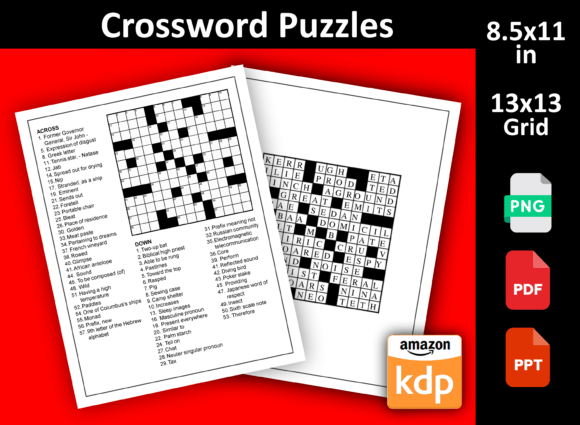
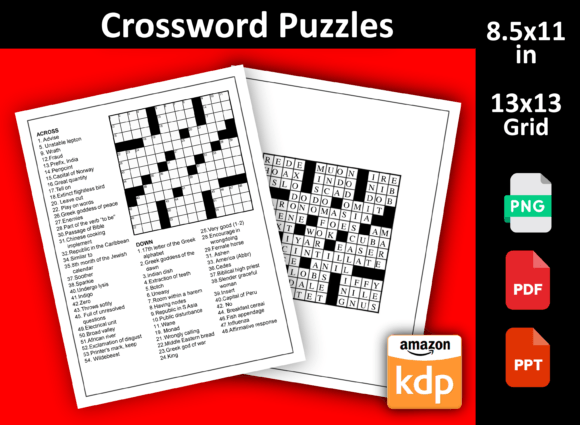
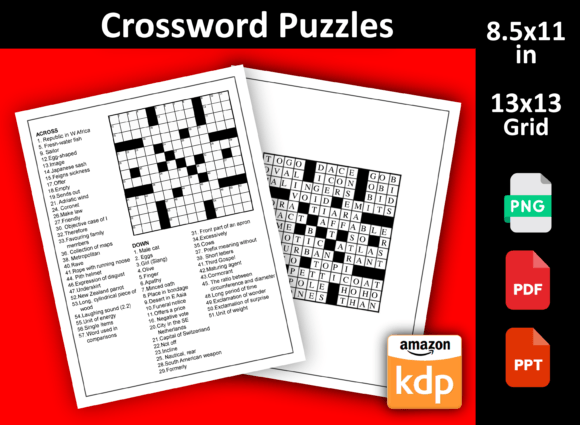
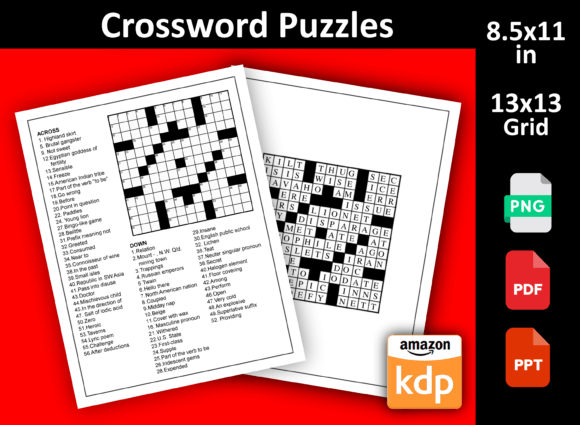
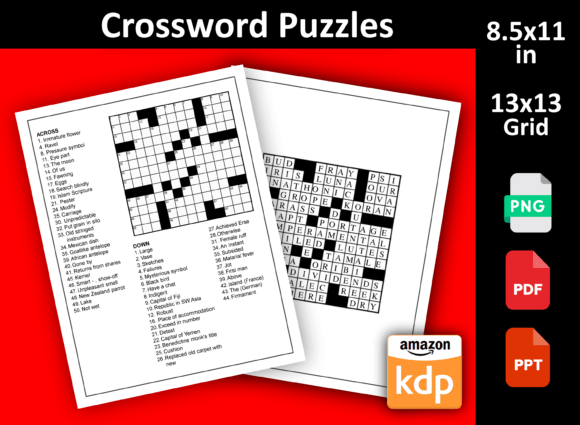
At its core, Crossword 11 is a single American-style crossword puzzle laid out on a clean 8.5 x 11 inch page with no bleed. The grid uses a 13×13 format, which sits comfortably between the smaller daily newspaper puzzles and the sprawling Sunday editions. This intermediate-to-hard difficulty range appeals to solvers who want more than a quick five-minute diversion but do not necessarily need the marathon challenge of a 21×21 grid. The puzzle comes with a corresponding solution page, so you are not left figuring out how to provide answers to your buyers. The package includes PDF, PPTX, and PNG files, which means you have flexibility regardless of whether you use PowerPoint, Canva, Adobe Acrobat, or direct image placement to assemble your book interiors.
Why Crossword Puzzle Books Keep Selling
Understanding why this niche works helps you make smarter choices about how to use a resource like Crossword 11. Crossword solvers are habitual buyers. Someone who finishes a book tends to look for the next one, often from the same publisher or series. This repeat-purchase behavior is gold for independent publishers because it means a well-organized book can generate a steady trickle of royalties without constant advertising. The demographic skews older, but younger adults are increasingly turning to analog puzzles as a screen-free way to relax. The key insight here is that solvers care about two things above all else: puzzle quality and presentation. A 13×13 American crossword with a unique design and clear formatting addresses both concerns before you even customize the cover.
Key Characteristics That Make This Interior Useful
Several specific features of Crossword 11 deserve attention if you are evaluating whether it fits your publishing strategy. The 13×13 grid size is particularly versatile. It is large enough to allow for interesting wordplay and thematic entries, yet compact enough to fit comfortably on a single page without microscopic font sizes. American crosswords follow conventions that seasoned solvers expect—symmetrical grids, no unchecked squares, and clues that range from straightforward definitions to clever wordplay. The intermediate-to-hard difficulty classification means your book can target an audience that has outgrown beginner-level puzzles but still wants a satisfying solve session that does not require a reference library.
The inclusion of a no-bleed design is a practical consideration that saves headaches during the upload process. Bleed settings trip up a lot of first-time KDP publishers. With no-bleed interiors, you simply upload your file and the trim size matches what you expect. The 8.5 x 11 inch dimensions are also familiar to buyers—this is a standard large-format puzzle book size that feels substantial in hand and provides plenty of writing room.
Practical Ways to Use Crossword 11 in Your Publishing Workflow
How you deploy this puzzle depends on your goals. Some publishers build entire books around a single difficulty level, collecting 50 or 100 puzzles of similar challenge into a themed volume. Others prefer variety, mixing easy, intermediate, and hard puzzles so the book caters to a wider skill range. Crossword 11 fits naturally into the intermediate-to-hard section of a mixed-difficulty collection. If you already have several volumes of crosswords, adding this puzzle as part of a new compilation helps differentiate the book from your previous releases without reinventing your entire design process.
Another practical approach is to use Crossword 11 as a bonus puzzle inside a larger activity book. For example, if you publish a puzzle variety book that includes word searches, sudoku, and mazes, slipping a well-crafted crossword into the mix adds perceived value. Buyers browsing Amazon often compare the number of puzzles against the price. A book with 101 puzzles looks more attractive than one with 100, and having diverse puzzle types can broaden your audience.
The Business Case for Puzzle Interiors on KDP
Publishing puzzle books on Amazon KDP differs from writing novels or non-fiction in one significant way: production speed. You are not spending months drafting and editing text. The bulk of your time goes into layout, design, and ensuring the puzzle content is accurate and enjoyable. This is where pre-made interiors shine. By starting with a formatted puzzle like Crossword 11, you reduce the most tedious part of the process—grid construction and clue writing. Anyone who has tried building a 13×13 American crossword from scratch knows that symmetrical grid design is a skill in itself, and writing clues that are clever but fair takes practice. Having a finished puzzle with a solution lets you focus on cover design, book structure, and marketing, which are the activities that actually drive sales.
The file formats in the zip package also support different workflows. PDF is the standard for KDP uploads and print-ready proofs. PPTX gives you the ability to rearrange pages, add borders, insert title pages, or adjust positioning without specialized design software. PNG files offer maximum flexibility—you can drop them into Canva, Photoshop, Affinity Publisher, or even Word documents and resize as needed. This multi-format approach means you are not locked into a single toolchain, which matters if you collaborate with designers or want to experiment with different book layouts.
Creating a Book That Buyers Notice
Amazon's search results for crossword books are competitive. Large publishers occupy many of the top slots, but independent creators regularly break through by offering something different. One effective strategy involves combining multiple volumes—take Crossword 11 and similar puzzles from different difficulty tiers or grid sizes, then package them into a single book with a clear, descriptive title that communicates exactly what the buyer receives. A title like "Large Print Crossword Puzzles: 13×13 Grids for Intermediate Solvers" tells the customer precisely what to expect. This specificity converts better than vague titles because crossword buyers often know their preferred grid size and difficulty level.
Presentation details also matter more than most new publishers realize. The 8.5 x 11 inch format with no bleed means buyers get a full page of puzzle with generous margins for notation. Many solvers write lightly in pencil, make notes in margins, or circle tricky clues. Tightly packed puzzles with cramped spacing lead to negative reviews, even if the clues are excellent. A clean, well-spaced layout communicates professionalism and respect for the solver's experience.
Who Benefits Most from This Resource
This crossword interior serves several types of creators. New KDP publishers who want to test the puzzle book market without investing in custom puzzle development or expensive design software can launch a test book quickly. Experienced low-content publishers who already sell notebooks, journals, or activity books can expand their catalog into crosswords with minimal additional effort. Educators and tutors might adapt the puzzle for classroom use, vocabulary building, or brain-training exercises with older students. Senior activity coordinators and caregivers often seek printed puzzles for residents or clients, and having a digital file that can be printed on demand simplifies distribution.
Freelancers and graphic designers who offer KDP formatting services can use Crossword 11 as a building block in client projects, saving time on puzzle sourcing while delivering a polished product. The PNG files in particular make it easy to drop individual puzzles into a variety of book layouts without wrestling with text formatting or font embedding issues.
Observations on Quality and User Experience
The American crossword format follows conventions that experienced solvers expect, and sticking to those conventions is wise. Solvers notice when grids have too many black squares, bizarre word choices, or clues that rely on obscure trivia without fair crossing letters. A puzzle designed with a unique layout and intermediate-to-hard difficulty suggests thoughtful construction rather than automated generation, which matters because automated puzzle generators often produce awkward grids that frustrate solvers. When customers feel that puzzles are fair and satisfying, they leave positive reviews and come back for subsequent volumes.
Including a solution page is a small but critical detail. Some puzzle books bury solutions in tiny print at the back, forcing solvers to flip pages constantly. Others omit solutions entirely, which leads to refund requests. With Crossword 11, the solution is provided right after the puzzle, so you can decide how to structure your book—solutions immediately following each puzzle, a dedicated answer section at the end, or a combination that suits your reader's preferences.
Making the Final Product Stand Out
Even with a ready-made puzzle interior, your cover design, title, and book description do the heavy lifting in converting browsers into buyers. Study the top-selling crossword books in your target category. Notice the fonts, colors, and imagery they use. Some categories favor bold, simple typography on solid backgrounds. Others use photographic elements or illustrated themes. Your cover should signal the difficulty level and format at a glance. A clean, professional cover paired with a well-formatted interior like Crossword 11 positions your book alongside traditionally published titles rather than looking like a rushed template job.
Consider also the spine and back cover if you plan to offer a paperback version. Crossword books often get used over several weeks or months, sitting on nightstands and coffee tables. A book that looks good in the hand and lays reasonably flat for writing will generate more goodwill than one that fights the user every time they try to solve a puzzle.
Final Thoughts on Building a Sustainable Puzzle Publishing Business
Puzzle publishing rewards consistency and attention to detail more than flashy marketing tactics. Customers who solve crosswords tend to be loyal, but they are also discerning. They know what a good puzzle feels like because they have solved hundreds or thousands of them. Delivering quality starts with the puzzle itself—the grid design, the clue craftsmanship, and the overall solving experience. Crossword 11 provides a solid foundation that meets the expectations of intermediate-to-hard solvers in a format that integrates smoothly into KDP workflows. Whether you use it as a standalone puzzle in a larger collection or as the starting point for an entire series, the practical value lies in saving time on puzzle creation while maintaining a standard that buyers respect and recommend.