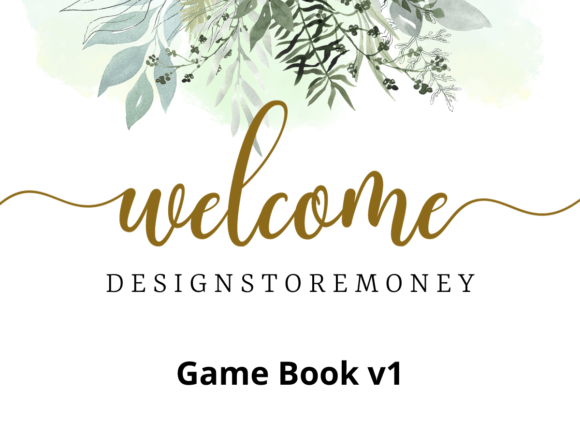
Game Book V1: Playful Nostalgia for Modern Designers
Some typefaces carry a sense of time and place so vividly that they become more than a tool—they shape the entire mood of a project before you’ve written a single word. Game Book V1 is that kind of font. It doesn’t shout or strain for attention; instead, it leans in with the warm, slightly irregular charm of a mid-century board game instructions booklet. The letterforms feel hand-inked, with subtle weight shifts, slightly rounded terminals, and an almost handwritten confidence that never tips into messiness. This is a display font built for personality, not paragraphs, and it channels the tactile pleasure of paper, ink, and family game nights.
Looking closely at the design, you notice that no two strokes are perfectly uniform. The slightly uneven baseline and the playful counters inside letters like ‘a’ and ‘e’ lend a crafted, analog feel—exactly what you want when designing something that should feel human and approachable. While Game Book V1 borrows from the visual language of early game manuals, it’s also a thoroughly modern creative font, digitized with clean outlines and generous spacing that hold up well on screen and in print. Its personality sits between a handwritten font and a quirky serif, making it exceptionally versatile for branding that needs to feel genuine rather than corporate.
Where Game Book V1 Feels Right at Home
Think beyond the obvious. Yes, Game Book V1 is a natural fit for anyone designing actual game materials—printable activity sheets, party game cards, or puzzle book interiors. But that’s only the starting point. The font’s nostalgic yet approachable character works hard across dozens of creative and commercial contexts. Small business owners could use it on chalkboard-style menus, bakery labels, or limited‑edition product packaging that wants to suggest handcrafted care. Bloggers and content creators can turn a simple social media graphic into something that feels like a cozy invitation rather than another algorithmic interruption. In editorial design, it shines on children’s magazine headlines, recipe card titles, or travel journal covers. Even serious brands can tap its charm for seasonal campaigns—imagine a insurance company’s direct mail piece that uses Game Book V1 on the envelope teaser to feel more like a postcard from a friend.
Printable game sheets are a particularly strong match, and many designers are returning to the simple pleasure of one‑page activities for event stations, classroom rewards, and screen‑free family time. Picture a Connect Four 9 Per Page layout: with nine compact grids on a single sheet, you need a header that instantly communicates the game’s name without overwhelming the small format. Game Book V1 does that beautifully—it’s legible at modest sizes yet carries enough character to make the page feel designed, not generic. Similarly, a Dots and Boxes 4 Per Page sheet benefits from the font’s warm, slightly vintage lines; the titles sit above the dot grids like a welcome mat. For language‑based games like Hangman 9 Per Page, the letterforms themselves become part of the fun, because they echo the hand‑drawn hangman scaffold and guessed letters children scribble. And on a Tic-Tac-Toe sheet—perhaps a page of nine mini‑boards for a wedding reception activity—the font turns a rudimentary game into a delightful piece of event design.
What’s compelling here isn’t just nostalgia. It’s the way Game Book V1 bridges printable and digital experiences. A PDF pattern for a craft fair, a downloadable activity book on Etsy, or a branded quiz app all feel more cohesive when the typography shares this same spirited DNA. The font helps tie together design assets across a product line, strengthening brand identity without needing an expensive custom typeface.
Readability, Hierarchy, and Emotional Connection
A display font like Game Book V1 isn’t meant for long reading passages—it’s a headline typeface that anchors the visual hierarchy. Used wisely, it draws the eye first, sets the emotional tone, and then hands off responsibility to a simpler companion face for body copy. That division of labor is a cornerstone of effective modern typography. When someone glances at a product label, a webpage, or a printed game sheet, their brain scans for visual landmarks. A distinctive header in Game Book V1 becomes that landmark, instantly signaling “this is fun, this is friendly, this requires your participation.”
The irregular, almost bouncy rhythm of the letters creates a sense of movement that works especially well for interactive or game‑related content. It subconsciously tells the viewer that the material is not static; it’s meant to be played with. In a logo design, this can transform a wordmark into a tiny story. Consider a board game café using Game Book V1 for its name—the font already suggests rolled dice, shuffled cards, laughter. Even without a pictorial icon, the brand perception shifts toward warmth and community. That’s the power of a carefully chosen creative font: it doesn’t just display words, it shapes expectations.
Professionalism and consistency don’t require stark minimalism. A designer can maintain a polished, commercial‑grade identity while using a typeface that feels playful. The key is pairing. When you set a clean sans serif font like Inter or Montserrat for instructions, ingredient lists, or copyright notices, the Game Book V1 heading acts as a controlled burst of personality. The contrast creates a visual rhythm that holds the reader’s interest without causing confusion. Over an entire product range—say a series of downloadable game books—the repeated use of this font builds recognition. Customers start to identify your work at a glance, even before reading a single description. That’s how audience engagement deepens from casual interaction to brand loyalty.
For projects like social media graphics, where viewers scroll quickly, the font’s distinctive letterforms can literally stop a thumb. A Hangman challenge posted on Instagram with the word “HANGMAN” set in Game Book V1 feels like a throwback to childhood, tapping into emotions that algorithms love because they generate saves and shares. Likewise, a printable dot‑grid journal cover marketed to crafters feels more artisan and less mass‑produced when the title uses this handwritten font aesthetic.
Choosing and Testing Without Guesswork
Before you commit Game Book V1 to a full project, run a few practical experiments. First, print a sample at the actual size it will be used—especially for game sheets like Connect Four 9 Per Page or Dots and Boxes 4 Per Page, where headers sit near game grids. Check that the letters don’t fill in or become blobby at small sizes. Most quality commercial fonts hold up well, but every printer and paper stock behaves differently. A slightly toothy craft paper might soften the edges in a pleasing way, while glossy cardstock could exaggerate any ink spread.
Next, test font pairing with real content, not just lorem ipsum. Grab the exact text block you’ll use—perhaps the rules for a printable Hangman sheet or the ingredient list on a cookie box—and set it in two or three neutral sans serif or light serif options. Look for pairings where the contrast feels intentional but not jarring. I often start with a geometric sans to balance Game Book V1’s humanist warmth, then check if the x‑heights roughly align. A pairing that needs too much size adjustment will make the design look pieced together rather than thoughtfully assembled.
Review the font’s character set, too. Game Book V1 likely includes punctuation, numerals, and possibly a few alternate glyphs or ligatures that add variety. Use them. Swapping in a different lowercase ‘g’ or a stylized ampersand can elevate a logo from competent to memorable. If you’re working on commercial game books or printable products, verify that the font has the symbols you need—dollar signs, euro symbols, copyright marks—before you’re stuck trying to fake a glyph with vector editing.
Also consider the emotional context. A script font might feel too wedding‑invitation for a board game, and a classic serif font too literary. Game Book V1 sits in a sweet spot that’s whimsical but not childish, nostalgic but not dated. It works for grown‑ups who still love games, which is precisely the audience for many independent publishers and makers. If your project targets adults recalling childhood favorites—a rebranded domino set, a luxury puzzle subscription—this typeface signals quality without pretension.
Licensing and Practical Commercial Use
One area where creative projects stumble unnecessarily is font licensing. Game Book V1 is a commercial font, meaning you need the appropriate license for how you’ll use it. If you’re creating a physical product like a Tic‑Tac‑Toe notepad that you sell, a standard desktop license often covers that, but only if you’re not embedding the font in the product as software. If you plan to include the font files with a digital product—like editable game sheet templates for Canva or Adobe Illustrator—that usually requires an extended license. Similarly, using Game Book V1 in a mobile app or on a website via @font‑face calls for web or app licensing. Read the End User License Agreement carefully; many independent designers rely on font sales for their livelihood, and using a font outside its licensed scope can lead to legal headaches that cost far more than the license fee.
For creators selling on print‑on‑demand platforms, the rules can be a little gray. As a general practice, converting the text to outlines in your design file and not distributing the installable font usually keeps you compliant, but always check the specific foundry’s terms. Some type designers explicitly permit use on printed goods, others restrict it. I keep a spreadsheet of my most‑used premium fonts with a quick note on what each license allows; it takes ten minutes to set up and saves days of worry later. Game Book V1 is worth that small administrative effort because it’s distinctive enough to become a signature element in your work—protecting that investment with proper licensing is just good business.
Bringing Game Book V1 into Your Workflow
You might start small. A freelance illustrator I know recently used Game Book V1 on a set of party invitation templates that included a Tic-Tac-Toe game on the back. Guests raved about the details, and the invites became conversation pieces before the event even started. A blogger revamped her holiday activity round‑up post with downloadable Dots and Boxes sheets featuring the font, and saw her email sign‑up rate triple because the printable felt so much more polished than the freebie worksheets parents usually see. A coffee shop printed Hangman 9 Per Page sheets on kraft paper using Game Book V1 for the title, put them on tables with a tiny pencil, and watched customers linger longer—boosting food and drink orders incidentally.
These examples aren’t about giant budgets or complex design systems. They’re about one thoughtful typographic choice that ripples out into how people perceive and interact with a brand or product. Game Book V1 won’t solve every design challenge, but when you need a typeface that feels like a fond memory you can hold, it delivers with consistency and charm. The font’s imperfections are its strength; they remind us that behind every game board, activity sheet, or logo there’s a person trying to connect with another person. In a design landscape that often prioritizes cold precision, that’s genuinely refreshing.