Name Tracing Sheets: The Simple Path to Confident Handwriting
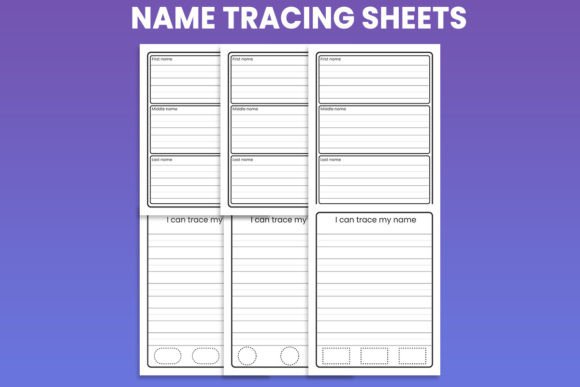
There’s something almost magical about a child’s first handwritten name. It’s the first piece of their identity they claim on paper, a tiny declaration of self that fuels curiosity for all the words that follow. Name tracing sheets harness that natural excitement, transforming it into a structured yet joyful learning experience. Unlike generic handwriting drills, these printable pages focus on the one word that matters most to a young learner—their own name. What makes this set remarkable is that it’s not simply a collection of dotted lines. It’s a full editing practice sheet, thoughtfully designed to teach letters, punctuation, and capitalization in one seamless activity. The digital download gives you six high-resolution pages at 300 DPI in CMYK color, with source files in AI, PDF, and SVG formats. That means whether you’re printing at home, laminating for a classroom, or customizing the design for a client project, you have every creative option at your fingertips.
Why Name Writing Matters More Than You Think
Writing a name is far more than a rote exercise. It’s a child’s first authentic piece of written communication, a bridge between recognizing symbols and understanding that those symbols carry meaning. When a preschooler traces their name, they’re not just moving a pencil—they’re building fine motor skills, strengthening hand muscles, and developing the pincer grip that underpins all handwriting. At the same time, they absorb crucial concepts: letters form words, the first letter gets a capital, and the sequence of strokes matters. Name tracing sheets accelerate this process by providing a safe, repeatable structure. Children see their name modeled correctly and practice it until the movements become second nature. This early success breeds confidence that spills over into drawing, letter recognition, and eventually sentence writing. For parents, these sheets become a treasured record of progress, while for teachers they serve as a go-to tool for literacy centers, morning work, or individualized support.
Unpacking the Editing Practice: Beyond Basic Tracing
What sets these name tracing sheets apart is their dual purpose as editing practice. A well-designed sheet doesn’t just ask a child to trace letters—it introduces the fundamentals of writing conventions. Imagine a page where the name appears in all lowercase letters, or perhaps missing its first capital. The child must identify the mistake and trace the corrected version. Some sheets include a simple sentence with the name, prompting the learner to notice where punctuation belongs or why the name stands out with a capital letter. This gentle introduction to editing builds an early awareness of standard English that pays off when kids move into composition. Instead of passively copying, they actively think about correctness. This approach aligns with E-E-A-T principles in early education: it shows real expertise in how children learn, establishes authority through proven pedagogical design, and builds trust with parents who want resources that truly teach, not just occupy.
Creative Ways to Use These Sheets in Daily Learning
The true power of name tracing sheets lies in how you adapt them. Here are just a few ideas that go far beyond pencil and paper:
- Dry-Erase Lifespan: Print a sheet on heavy cardstock and slip it into a clear plastic sleeve. Your child can trace with a dry-erase marker, wipe it clean, and repeat endlessly. This builds muscle memory without wasting paper.
- Sensory Tracing: Spread a thin layer of sand, salt, or shaving cream on a tray and use the printed name as a model. Kids love the tactile feedback, and it strengthens letter formation even before they grip a pencil.
- Stencil Craft: Use the SVG file to cut letter stencils with a cutting machine like a Cricut. Children can sponge-paint their name, creating a personal piece of art for their bedroom door or a custom card.
- Name Puzzle: Print and cut the letters apart, then challenge the child to reassemble their name in order before tracing. This adds a problem-solving element that deepens letter recognition.
- Classroom Gallery: Have each student complete and decorate their name sheet on the first week of school. Display them together to foster a sense of belonging and community.
Customizing for Different Ages and Skill Levels
Because the download includes fully editable AI and SVG files, these name tracing sheets become a launchpad for endless personalization. Change the name instantly, add a middle name for extra practice, or adjust the font to suit your child’s school handwriting style. For toddlers just starting out, strip back the editing elements and focus solely on bold, chunky letters with wide tracing paths. For kindergarteners ready for more, expand the sheet to include their full name, a title like “Mr.” or “Ms.”, and a short phrase with punctuation to edit. Even older children benefit when you increase the complexity: provide a sheet with a mixed-up capitalization and missing periods, then ask them to correct it before tracing. This layered approach means the same resource grows with the child, providing years of value. It’s equally powerful for special education settings, where repeated exposure and incremental challenge can make a measurable difference.
Printing Like a Pro: Getting the Most from Your Download
The technical quality of these files ensures you’ll rarely run into problems, but a few smart choices make the results shine. Always use the PDF for direct printing—it’s color-managed for CMYK and locked at 300 DPI, so letters stay crisp whether printed on a home inkjet or a professional press. For reusable classroom materials, load your printer with heavyweight cardstock (at least 100 lb) to withstand weeks of eager handling. If you plan to laminate, print with a slight boost in saturation to compensate for the plastic’s softening effect. The SVG files let you scale the design up or down without any loss of clarity, perfect for creating oversized floor mats or tiny name tags. Designers and sellers will appreciate that the AI files preserve every layer and font, allowing full commercial-ready editing. A quick tip: when personalizing names, always embed fonts or convert text to outlines before sending to print to avoid substitution surprises.
From Home to Business: How Designers and Educators Can Use These Sheets
These name tracing sheets aren’t just for personal use—they’re a business asset. Entrepreneurs on platforms like Etsy or Teachers Pay Teachers can build entire product lines around personalized name practice books. The AI and SVG source files give you the creative freedom to add custom branding, swap color palettes, or insert thematic graphics like dinosaurs, unicorns, or space motifs. A preschool owner might upload a child’s name and print a batch of take-home sheets with the school’s logo, reinforcing brand recognition while supporting literacy. Parenting bloggers can offer free customized name sheets as a lead magnet, driving traffic and building an email list. Coaches and tutors can integrate the sheets into client packets, demonstrating a polished, professional edge. Because you’re not starting from scratch, you save hours of design work while still delivering a product that feels bespoke and high-quality.
Building a Routine That Sticks
Consistency turns curiosity into skill, but forcing a child to trace pages every day is a recipe for resistance. Instead, weave the practice into existing rhythms. Keep a sheet at the breakfast table and ask your child to trace their name before eating. Stash a few copies in your bag for waiting at appointments or restaurants. After reading a bedtime story, have them sign the book’s inside cover with a tracing as a “this book belongs to” label. Celebrate progress with a simple sticker chart or by framing a particularly neat page. The key is to link handwriting to real-life purpose—signing a birthday card, labeling a lunch box, or putting their name on an art project. When children see that their writing has power, they become intrinsically motivated to improve it. These name tracing sheets give you the flexible, high-quality canvas to make that happen day after day, in ways that feel like play rather than work.
From the AI file’s design potential to the 300 DPI CMYK output that pops on paper, this editing practice sheet set is a bridge between early literacy and real-world writing confidence. It respects the way children learn best—through repetition, visual modeling, and the thrill of seeing their own name neatly formed. Whether you’re a parent ready to nurture that first authentic scribble, a teacher building a resource-rich classroom, or a creator looking for a polished foundation to build upon, you’ll find these six pages to be a quietly powerful tool that grows alongside the little hands that use them.