Organizing Digital Adventures: The Practical Art of Using a Video Games Tracker Logbook
Why Your Gaming Experience Deserves a Structured Companion
Modern gaming presents a paradox of abundance. Platforms like Steam, PlayStation, Xbox, and mobile app stores offer thousands of titles, yet the more we accumulate, the less we truly engage. A Video Games Tracker Logbook transforms this scattered consumption into a mindful, curated journey. It’s not merely a list of what you own—it’s a personal archive where completion stats, difficulty milestones, revisits, and emotional resonance are captured. For the competitive player, it serves as a trophy case beyond digital achievements; for the narrative explorer, it’s a journal of worlds lived in. The human brain is poor at recalling details of 40-hour epics played years apart. A dedicated tracker closes that gap, making every session contribute to a richer long-term relationship with the hobby.
Beyond personal satisfaction, such a logbook has practical applications. Parents can use it to monitor children’s play patterns, ensuring age-appropriate content and balancing screen time. Researchers studying game design can annotate mechanics, narrative structures, and difficulty curves across genres. Even developers benefit by keeping competitor analysis or inspiration logs. The physical act of writing—of checking a box, entering a date, or rating a boss fight—reinforces memory and critical thinking in ways that digital spreadsheets often dilute. This is why print-ready trackers, especially those designed for self-publishing, are gaining traction among organizational enthusiasts and stationery lovers.
The Anatomy of a Functional Gaming Logbook
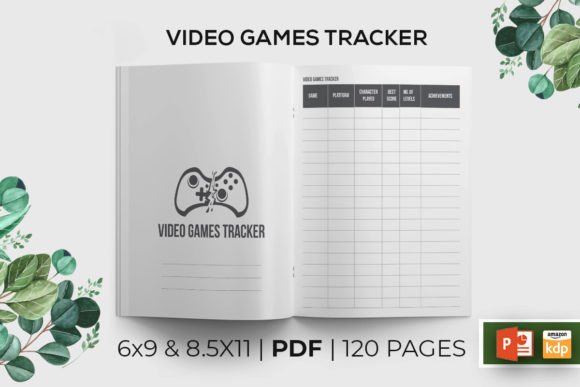
Not all trackers are created equal. A well-designed Video Games Tracker Logbook balances data capture with aesthetic pleasure. Core elements usually include fields for game title, platform, start and finish dates, completion percentage, rating, and personal notes. But the thoughtful layout goes further. For instance, a “replay value” section lets you flag games worth revisiting, while a “difficulty modifier” column appeals to those who tackle New Game+ or permadeath runs. Genre checkboxes help you spot patterns in your tastes over time. The logbook that accompanies instant download options, such as the exclusive KDP-ready interior, often incorporates these nuances into a clean, typography-driven spread that works in both 6 x 9 and 8.5 x 11 inch formats—sizes specifically chosen for their compatibility with standard shelf storage and the generous writing space they afford.
One distinguishing feature of a professionally crafted interior is the intro page. It sets the tone with a brief manifesto on intentional gaming, plus space to name the logbook’s owner and establish goals. From there, 120 total pages provide enough capacity to log roughly two to four games per double-page spread, meaning you can track hundreds of titles. The absence of bleed in the design is a technical detail that matters greatly to independent publishers: it ensures that when the PDF is uploaded to Amazon KDP, critical content stays safely within the trim lines, preventing accidental cropping. The file has been KDP tested, a reassurance that the paperback will reflect the digital preview with precision.
From Personal Tool to Published Product: The KDP Opportunity
For creative entrepreneurs, understanding the logbook as a self-publishing asset opens a new revenue stream. The low-content book market on Kindle Direct Publishing thrives on precisely these kinds of interiors. Educators teaching game design or media literacy can create custom course materials. Bloggers and influencers can craft branded merchandise that resonates with their community. Even local game stores might offer a house-branded tracker as a loyalty gift. The “ready to upload” nature of the PDF eliminates the steep learning curve of formatting software. You download the file, review the 120-page structure, optionally add your own cover, and publish. No graphic design degree required.
What makes this particular interior design compelling? It’s been built with the end-user’s handwriting comfort in mind. The line spacing, the subtle grid guiding checkboxes, the deliberately muted headers—these details reduce visual fatigue. Because the file comes without bleed, you avoid the common rookie mistake of stretching backgrounds to the edge, which can cause rejection during Amazon’s review process. The two size variations (6 x 9 and 8.5 x 11 inches) cater to different customer preferences: the smaller format is portable, purse-friendly, and feels like a field journal; the larger one sits open on a desk, offering expansive room for detailed session notes. This duality means one design can serve multiple niches simply by uploading separate listings for each trim size.
Who Benefits Most from a Structured Game Tracker?
- Completionists and Trophy Hunters: Tracking percentage progress, collectibles found, and secret areas uncovered transforms a checklist compulsion into a satisfying visual history. Seeing a row of 100% ratings provides motivational momentum.
- Parents and Guardians: A shared logbook becomes a conversation starter. Record what your child played, how long, and what lessons or questions arose. It’s a parenting tool wrapped in a hobby.
- Game Developers and QA Testers: Use the logbook to document bugs, design observations, and competitor feature sets. The structured fields can be adapted to track build versions and test case IDs.
- Retro Gaming Enthusiasts: With limited save systems or battery-backed RAM that fails, a physical log preserves passwords, save codes, and personal high scores that emulators won’t remember.
- Tabletop to Digital Crossover Fans: Many board game groups track their digital adaptations (like Gloomhaven or Wingspan) separately. A unified tracker bridges the physical-digital divide.
Practical Considerations When Implementing a Tracking Habit
Adopting a Video Games Tracker Logbook is simple, but sustaining the habit requires a pinch of behavioral design. Place the logbook near your gaming setup. Set a ritual: after every session, even a short one, jot down three words about your experience. Over time, these minimal entries evolve into a nuanced picture of your gaming life. For those who fear blank pages, the pre-structured interior removes the “what do I write?” paralysis. A 120-page book may seem substantial, but it’s designed for longevity—you might log for two years before needing a replacement. This makes it a cost-effective investment compared to disposable notepads or disorganized phone notes.
Another consideration is privacy. Digital trackers like Steam’s profile or third-party apps share data with servers. A physical logbook is offline by nature. Your gaming preferences, playtimes, and ratings stay with you. For researchers handling beta builds under NDA, this is crucial. And for everyday users, it prevents algorithmic profiling based on your entertainment habits. The tangible aspect also creates a delightful archival object: imagine shelves lined with dated volumes, chronicling decades of gaming evolution from 8-bit to VR. That’s a legacy a cloud account cannot match.
Design Intelligence Behind the KDP-Ready Interior
When you access an exclusive download labeled “KDP Interior,” you’re getting more than a PDF. You’re receiving a file engineered for Amazon’s printing ecosystem. The 6 x 9 option uses a 0.5-inch margin that feels generous without wasting paper. The 8.5 x 11 version mirrors the familiar US letter proportion, maximizing writing real estate. Both versions share the same thoughtful page count, including an intro page that frames the user experience. Being KDP tested means the file has survived Amazon’s automated checks for DPI, trim alignment, and font embedding. This is a silent quality signal for serious self-publishers who don’t want to risk account flags due to format errors.
The no-bleed specification deserves emphasis. Bleed extends artwork beyond the trim so that finished pages show color edge-to-edge. Interiors with bleed require precise margin management and can confuse novice creators. By removing that variable, this logbook interior is truly “ready to upload.” You select the PDF, set your pricing in KDP, upload a cover—if you have one—and within 24 to 72 hours, a proof copy is available. For hobbyists printing at home, the same file works seamlessly with any desktop printer, using standard paper settings. The dual-size flexibility means you can experiment: publish a pocket edition and a desk edition, observing which your audience prefers.
Expanding the Concept Beyond Simple Lists
A logbook’s value multiplies when you treat it as a living document. Beyond basic cataloging, include a section for “game nights” where you log group play, couch co-op anecdotes, or competitive tournament results. A “wishlist vs. backlog” module helps you decide purchases based on time availability rather than sales pressure. Some users dedicate a few pages to sketching favorite maps, jotting lore theories, or pasting post-it notes from strategy guides. The flexibility of blank sub-pages within the 120-page count encourages this creative freedom. The Video Games Tracker Logbook interior, being a hosted structure, provides enough empty fields to adapt to individual quirks without feeling crowded.
Teachers can create assignment-specific versions. A media studies class might analyze three games per semester, using the tracker to log thematic elements, historical context, and technological milestones. Students engage critically because the tool is playful. Meanwhile, streamers and content creators can use the logbook as a pre-production planner—listing games they want to showcase, noting patch updates, and scheduling community play-alongs. It becomes a content calendar and personal retrospective hybrid. The same interior design that serves a solo player also scaffolds these professional uses because it doesn’t impose a single narrative; it provides a bone structure for local customization.
Making the Choice: Digital vs. Physical Tracking Systems
Why opt for a printable, physical logbook when apps offer automatic time tracking and cloud sync? The answer lies in attention architecture. Automatic trackers generate data passively, but they rarely invite reflection. You glance at a dashboard of hours played and move on. Writing by hand, conversely, engages motor skills and slows cognition just enough to prompt metacognition: “Did I enjoy this, or was I just completing it?” The Video Games Tracker Logbook fosters intentionality. It’s a deliberate pause in an automated world. Moreover, the KDP-ready PDF empowers you to print refined copies without starting from scratch. For each new year or console generation, you can order a fresh batch on-demand, maintaining a consistent format across time.
There are also accessibility angles. Screen fatigue is real; a paper logbook offers eye relief. For individuals with certain neurodivergences, tactile tracking reduces cognitive load compared to navigating app interfaces with notifications and advertisements. The interior design’s clear typography and generous white space accommodate users who find digital dashboards overwhelming. And because you can choose the larger 8.5 x 11 inch format, those with motor difficulties benefit from extra square footage per entry.
Observations from the Self-Publishing Community
In KDP forums, successful low-content publishers note that niches like gaming logs perform well because they tap into passionate subcultures. A Video Games Tracker Logbook – KDP Interior Design Download solves a specific pain: most generic notebooks lack the specialized fields gamers crave. By providing an exclusive, pre-tested interior, creators can quickly launch a product that feels tailor-made. The 120-page count hits a sweet spot—thick enough to feel substantial, thin enough to keep printing costs affordable, yielding a healthy royalty margin. The intro page acts as a soft landing, reducing the bounce rate when customers flip through the “Look Inside” feature on Amazon. It signals intentionality.
From a consumer’s standpoint, purchasing a printed tracker derived from such an interior often comes with a quality guarantee. Because the file was tested, the printed book will have consistent margins, no cut-off text, and a layout that breathes. Badly formatted interiors create frustration and returns; tested ones protect the buyer’s time and money. Whether you download the original PDF to print at home or buy a finished copy on Amazon, the underlying design integrity remains the same.
Final Practical Insights for Getting Started
Begin small. Print the first 20 pages in the 6 x 9 size using the PDF, staple them into a booklet, and trial the tracking for two weeks. Note which fields you actually use. Do you need a “date completed” or do you prefer “date abandoned”? Adjust your habit before committing to a full 120-page print. If you’re a publisher, download the interior and immediately test it via KDP’s Print Preview. Toggle between the two trim sizes to see how footers and headers behave. Check that the intro page aligns with your brand voice—if not, you can modify the PDF using a tool like Canva or Inkscape, as long as the basic structure stays intact.
The intersection of gaming culture and analog tools is not nostalgia—it’s a functional rebellion against digital ephemera. A well-designed Video Games Tracker Logbook, especially one available as a tested KDP interior, bridges the gap between playing and preserving. It turns a leisure activity into a documented craft, making every virtual conquest a tangible entry in a lasting personal archive. Whether you’re logging for yourself or building a business around stationery, the clarity of purpose embedded in the design ensures that the logbook feels less like a chore and more like a co-pilot on your gaming journey.