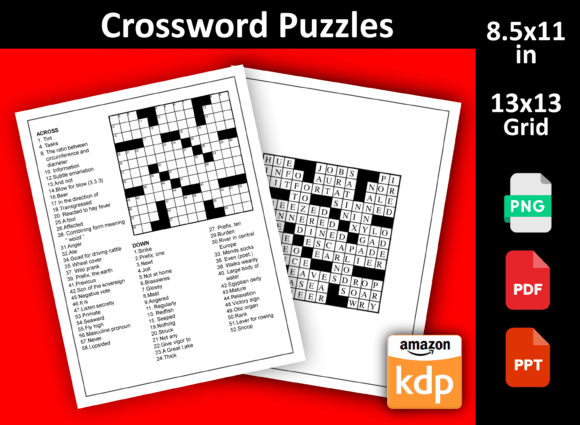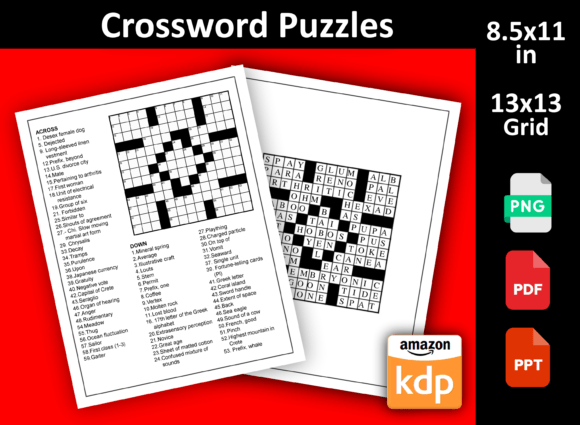
Crossword 22: A Professional Puzzle Interior for Self-Publishers
The low-content publishing market on Amazon KDP continues to reward creators who deliver clean, well-organized interiors. Puzzle books, particularly crossword collections, remain a staple because they attract a wide age range and repeat buyers. Among the many ready-made templates available, Crossword 22 has caught the attention of publishers looking for a balanced mix of challenge and design. It isn't a full book; it’s a single puzzle page template packaged with a solution sheet, formatted for quick insertion into a larger manuscript. For someone assembling a crossword book, this kind of modular resource saves hours of layout work while maintaining a consistent, professional look.
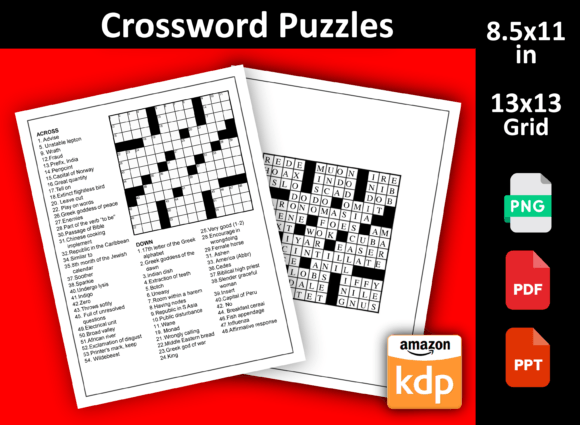
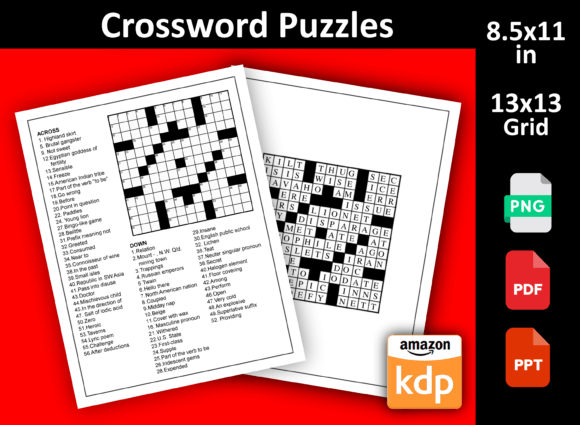
What makes Crossword 22 worth discussing is its focus on a specific grid style and difficulty range that appeals to a dedicated reader segment. Many generic puzzle interiors cater only to beginners, leaving a gap for intermediate and advanced solvers. Crossword 22 steps into that gap with a 13x13 American-style grid labeled as intermediate to hard. The symmetrical layout and clue structure avoid the overly simple feel of 9x9 children’s puzzles, yet aren't as intimidating as a full 15x15 Sunday grid. That middle ground offers publishers a targeted positioning tool, especially when bundling multiple volumes or creating themed puzzle books.
What the Crossword 22 Interior Actually Includes
At its core, Crossword 22 provides three essential files inside a single zip: a PDF, a PPTX, and a PNG. Each format serves a distinct purpose. The PDF is print-ready at 8.5 x 11 inches with no bleed, which aligns perfectly with Amazon’s trim size requirements for standard puzzle books. The PPTX file allows direct editing in PowerPoint, making it easy to tweak design elements, move clue lists, or adjust font properties without touching professional design software. The PNG offers a high-resolution image that can be dragged into various layout tools, from Canva to Adobe InDesign. This multi-format approach respects the fact that KDP creators have vastly different workflows and software preferences.
The package delivers one crossword puzzle per download, complete with a clean solution page. The grid is 13 squares by 13 squares, following American crossword conventions: black squares are arranged symmetrically, words interlock tightly, and no two-letter words appear. The difficulty level straddles intermediate and hard, meaning clues rely on general knowledge, wordplay, and occasional trivia rather than obscure references. The interior design avoids decorative clutter, sticking to a monochrome palette that prints well in black-and-white — a critical factor for keeping KDP printing costs low.
Design Consistency and Print Readiness
Many self-publishers underestimate how quickly poor interior formatting erodes reader trust. A crossword book where grids shift position between puzzles, clue fonts change size, or numbering becomes inconsistent will accumulate negative reviews. Crossword 22 addresses this by providing a repeatable template structure. When you license multiple puzzles from the same designer or purchase similar volumes, you can expect the same margin widths, clue box placement, and title formatting. That consistency is hard to achieve when sourcing puzzles from different places and stitching them together manually.
The 8.5 x 11 inch trim with no bleed is especially practical. Bleed settings often confuse new KDP publishers, leading to upload errors or unexpected cropping. A no-bleed design means the content stays within safe margins without requiring extra image extension. The PDF file is already calibrated for this, so you can drop it directly into a manuscript without worrying about resizing. The title and copyright placeholders inside the PPTX version give you clear spots to add your branding or puzzle series name, yet they remain unobtrusive enough to let the grid remain the focal point.
Practical Value for KDP Publishing Workflows
Time remains the largest hidden cost in low-content publishing. Building a crossword from scratch — researching words, constructing a symmetric grid, numbering squares, writing balanced clues, then formatting everything to KDP specs — takes hours for an experienced constructor and much longer for a novice. Crossword 22 functions as a shortcut that doesn’t sacrifice originality. By mixing several pre-made puzzle interiors, you can assemble a full 50-puzzle book in a single afternoon rather than over several weekends. This speed-to-market advantage matters when seasonal niches or trending themes demand a quick release.
The modular nature also benefits creators who want to test different book concepts without overcommitting. Perhaps you want to combine crosswords with Sudoku, word searches, or coloring pages. You can pull one Crossword 22 puzzle into a sampler book, evaluate customer response, then scale up if the audience responds. Or you might use it to create a “crossword of the week” planner, where each spread includes a calendar layout and one puzzle. The versatility lies in treating each puzzle interior as a building block rather than a complete product.
Editing Flexibility and Brand Adaptation
The inclusion of a PPTX file is a quiet but significant detail. While PDFs are ideal for final printing, they lock in the design unless you own advanced software. PowerPoint is ubiquitous and familiar. Inside the PPTX, you can change clue fonts to match a series aesthetic, add a small logo in the corner, adjust the spacing between the grid and the clue list, or swap in a themed header. For publishers creating puzzle books around specific topics — gardening, history, movie trivia — the ability to quickly add a subtle visual cue turns a generic puzzle into a thematic fit.
However, it's important to understand what the PPTX does not allow. The grid itself and the arrangement of black squares are fixed. You cannot turn a 13x13 grid into a 15x15 or modify the word list because the interlocking pattern depends on the original constructor’s design. This is a strength in terms of reliability (you know the puzzle works) but a limitation if you need full creative control over grid content. For most KDP publishers, the trade-off is acceptable because solving reliability matters far more than customization depth.
Audience Fit: Who Benefits Most from Crossword 22
Crossword 22 isn't for everyone. Absolute beginners to puzzle publishing might find the intermediate-to-hard difficulty level a bit steep for their initial target audience. If your brand focuses on easy, relaxing puzzles for seniors or casual solvers, this interior may frustrate some readers. The difficulty label matters. Amazon’s algorithm doesn’t read difficulty labels on the interior, but customer reviews certainly do. A book marketed as “easy crosswords” that contains challenging 13x13 grids will attract returns and disappointment.
The ideal user is someone who has already validated that their audience wants a mental workout. This includes publishers serving educated professionals, puzzle club members, retired academics, or anyone who prefers their crosswords to require a good dictionary and some lateral thinking. The American-style grid also assumes a primarily North American or English-speaking market familiar with common crossword conventions. It would need significant adaptation for UK-style cryptic crossword fans or other regional puzzle traditions.
Educators and therapists might also find selective use for these puzzles. A teacher developing enrichment materials for gifted middle schoolers or a cognitive therapist curating brain-training exercises could pull individual puzzles from the pack to supplement their resources. The standalone nature of each puzzle means you don’t have to license an entire book’s worth if you only need a few high-quality examples.
Multi-Volume Strategy and Product Line Building
One overlooked advantage of working with consistent puzzle templates like Crossword 22 is the ability to build a recognizable series. When every volume shares the same grid dimensions, font treatment, and layout rhythm, customers come to expect a certain experience. This brand recognition reduces decision friction on the product page. A shopper who enjoyed Volume 1 will feel confident buying Volume 2 if the interior preview looks familiar and the difficulty progression matches their expectations.
Mixing and matching with other puzzle types also opens up compilation formats. A multi-puzzle book featuring 25 crosswords, 25 word searches, and 25 sudoku delivers variety that appeals to a broader buyer base. With a modular template, you can intersperse Crossword 22 puzzles among other pre-made interiors, ensuring every section maintains professional polish. The challenge, of course, is keeping the difficulty curve coherent across different puzzle types, but that's a curation challenge rather than a design one.
Quality Considerations More Publishers Should Examine
Before purchasing any pre-made puzzle interior, it’s wise to check a few technical details. First, verify that the clue numbering matches the grid and that all across and down clues are present. A single mismatched number can derail the entire solving experience. Second, open the PDF at various zoom levels to confirm that grid lines are crisp and text remains legible when printed at the intended trim size. Some templates look fine on screen but produce faint lines when rendered by Amazon’s printing process. Third, test the PowerPoint file on both Windows and Mac systems if possible, as font substitution issues occasionally arise.
Real-world testing from publishers who have used similar puzzle interiors suggests that the biggest quality concerns cluster around solution accuracy and clue fairness. A hard puzzle isn't problematic, but a puzzle that relies on excessively obscure proper nouns or defunct slang loses its appeal. The Crossword 22 template would benefit from a quick solve-test before publishing, even if the designer guarantees accuracy. A second pair of eyes catches errors that the original constructor might have missed after staring at the grid for hours.
Long-Term Value and Upfront vs. Ongoing Costs
A single puzzle interior like Crossword 22 typically follows a one-time purchase model. That means you own the files and can reuse the puzzle in multiple products or revisions without recurring fees. This contrasts with subscription-based puzzle libraries that charge monthly. For a publisher planning to release a large catalog over time, owning the assets makes financial sense. Even if you use the puzzle only once, the cost per unit is negligible compared to the hours saved.
The longer-term value depends on how you package it. A single crossword dropped into a miscellaneous activity book will be consumed once and forgotten. But when combined thoughtfully with other intermediate-level puzzles, it contributes to a product that can remain in your catalog for years, generating passive income. Puzzle books don't follow the same trend cycles as topical nonfiction; a well-made crossword collection from three years ago still sells today as long as the content remains evergreen. The 13x13 grid size and intermediate-hard difficulty create an enduring category rather than a fleeting fad.
What Could Be Improved
No product suits every scenario. For some publishers, the lack of multiple puzzle variations in a single download might feel limiting. If you want to create a book of 100 crosswords, acquiring them one at a time becomes tedious unless the seller offers bulk pricing. Similarly, the American-style grid assumes a certain clue architecture that may not resonate with international audiences who prefer diagramless or barred-grid formats. The template doesn't include themed puzzles or cryptic clues, which limits its range for certain niche markets.
The intermediate-to-hard labeling also deserves nuance. What one constructor considers intermediate, another might label as advanced. Without a detailed breakdown of clue types or a sample puzzle to gauge difficulty, publishers must rely on the description alone. A more transparent approach would provide a preview of several clues or a difficulty rating system with concrete examples. Still, these are considerations rather than dealbreakers, especially for experienced publishers who can assess fit by looking at the grid density and black square pattern.
Integrating Crossword 22 into a Larger Publishing Plan
Think of this interior as a component, not a book. The real skill lies in curation. A publisher might match Crossword 22 puzzles with theme-based word lists: one volume titled “Literary Crosswords,” another “Science & Nature Crosswords,” each using the same grid structure but with clues rewritten or tailored to the topic. Because the PPTX file allows text edits, you can partially rebrand each puzzle to fit a niche while retaining the solved grid integrity. This hybrid approach blends ready-made efficiency with a customized editorial touch that separates professional books from template-only collections.
The puzzle book market on KDP rewards those who understand that customers buy an experience, not just pages of grids. A consistent interior design, a logical difficulty progression, and clear solve-testing all signal quality. Crossword 22 provides one piece of that puzzle — a reliable, well-formatted 13x13 grid that fits cleanly into a variety of book structures. Whether you use it as a filler puzzle between easier sections, the backbone of a hard crossword challenge book, or a quick addition to a multi-activity volume, its usefulness depends on how thoughtfully it’s deployed within the larger product.
Publishers who treat each interior purchase as a strategic asset rather than a shortcut tend to build stronger, more review-resistant catalogs. In a marketplace flooded with hastily assembled puzzle books, the small details — accurate solutions, crisp printing, logical difficulty labels — separate titles that sell steadily from those that disappear into the algorithm. Crossword 22, when used with care and paired with a smart publishing approach, can absolutely contribute to that kind of sustainable book business.