Crossword 30: A Smart Shortcut for KDP Puzzle Book Creators
Puzzle books continue to dominate Amazon’s bestselling activity lists, and crossword collections remain a steady favorite among both kids and adults. If you have explored selling print-on-demand books through Kindle Direct Publishing, you already know that standing out takes more than a generic interior. This is where a well-built resource like Crossword 30 enters the picture. It is not a book itself but a ready-to-use puzzle interior—a single, carefully constructed crossword with solution—that you can drop into your project, remix across multiple volumes, or use as a foundation for a series. For self-publishers who value speed and consistency, understanding how this kind of asset works can remove some of the biggest bottlenecks in content creation.
What Makes a Crossword Interior Worth Your Time
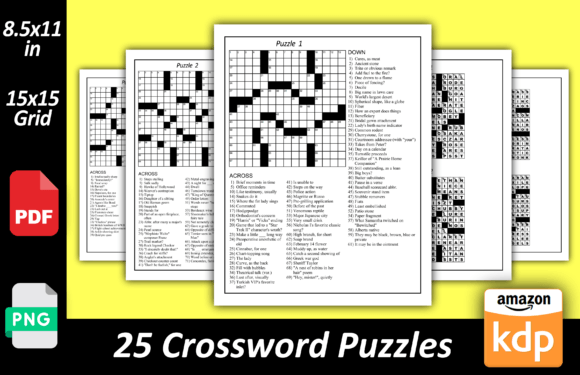
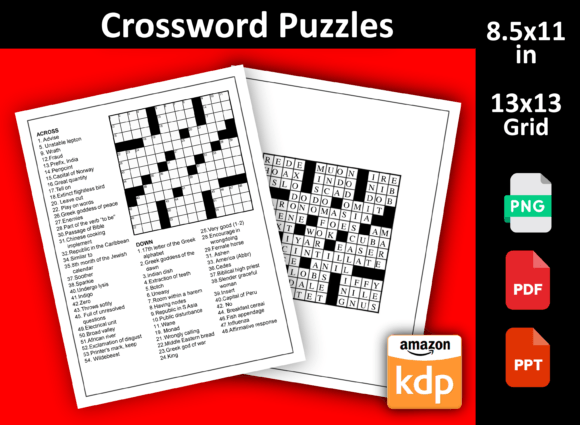
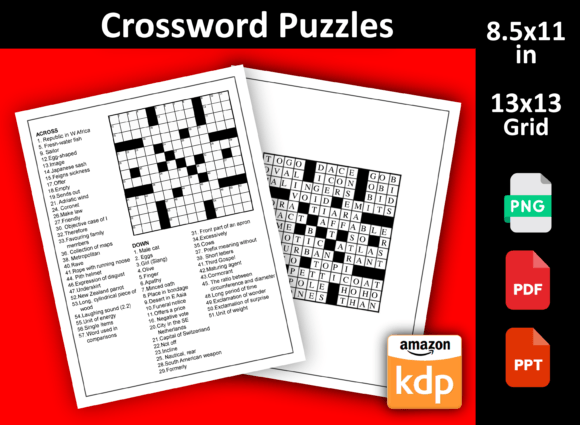
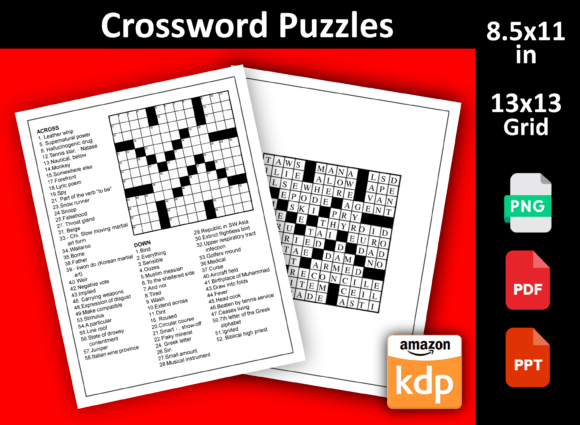
Most first-time KDP authors underestimate two things: the time it takes to build professional puzzle grids and the impact that consistent formatting has on reader satisfaction. Crossword 30 addresses both. This interior arrives as a zip file containing a PDF, an editable PPTX, and a high-resolution PNG. The file is set to 8.5 x 11 inches with no bleed, which aligns perfectly with Amazon’s most common trim size for activity books. You get one American-style crossword on a 13x13 grid, calibrated for an intermediate to hard skill level, and a matching solution page. The design is deliberate. It is clean, readable, and free of distracting clipart, so solvers can focus on the clues without visual noise.
The practical advantage here is immediate. Instead of learning grid-construction software or spending hours tweaking margins, you open the file, place it into your book template, and move on. For a creator who wants to publish a fresh puzzle book every month, that shift from “I need to build everything from scratch” to “I can assemble, brand, and publish” can be the difference between a side project and a reliable income stream.
Why the 13x13 American Grid Appeals to a Loyal Audience
Puzzle difficulty is not just about word rarity—it is also about grid size and clue style. A 13x13 American crossword sits in a sweet spot. It is larger and more challenging than the compact 9x9 grids often found in beginner books, yet it does not demand the marathon commitment of a 21x21 Sunday puzzle. The intermediate-to-hard level of Crossword 30 targets solvers who have moved past word-search-style crosswords and want something that requires real vocabulary recall, lateral thinking, and a satisfying “aha” moment.
This matters because your book’s return rate, review profile, and long-term visibility on Amazon are influenced by whether the product matches buyer expectations. When a customer buys a puzzle book labeled “challenging” and finds only overly simple clues, they feel misled. Crossword 30’s difficulty calibration reduces that risk. It signals to a specific reader: someone who does crosswords on weekends, during commutes, or as a screen-free evening ritual. These readers are more likely to finish the puzzle, feel accomplished, and look for the next volume you publish under that brand.
Saving Hours While Keeping Creative Control
Many publishers initially assume they must design every puzzle themselves to maintain originality. That instinct is understandable, but it overlooks a smarter workflow: treat interiors like building blocks. Because Crossword 30 includes both an editable PPTX and a flat PDF, you can leave the puzzle exactly as is, recolor it, add your own branding, insert section dividers, or pair it with complementary puzzle types. The PPTX format is especially useful if you want to adjust font styles or embed it into a larger book series where other puzzle types—logic grids, word searches, cryptograms—also appear.
Think of a real scenario. You want to launch a “Mind-Sharpening Puzzles for Adults” series. Volume 1 combines fifteen crossword puzzles with fifteen Sudoku. You use a variety of interiors, including Crossword 30, to assemble a consistent visual experience. The no-bleed setup means you do not have to worry about trimming issues at the printer, because all content stays safely within the margins. By mixing volumes—some lighter, some harder—you create a cohesive catalog without spending weeks on puzzle design. The time you save can go toward market research, cover design, keyword optimization, or simply launching faster than competitors who insist on building every element themselves.
Practical Uses Beyond a Single Book
A common mistake new KDP publishers make is viewing each interior as a one-time asset. Crossword 30 is better approached as a modular component. You can drop it into a large-print puzzle collection, a travel-themed activity book, a holiday gift edition, or a “coffee and crosswords” relaxation series. The solitary puzzle and its solution can be the seed for an entire branded line if you combine it with other volumes of similar or varying difficulty. That flexibility is where the long-term value lies. Instead of producing one book and stopping, you build a pipeline.
- Series building: Use Crossword 30 in Volume 1, then add two more intermediate-hard puzzles in Volume 2, gradually increasing the page count while maintaining a recognizable interior style.
- Niche targeting: Pair the puzzle with trivia pages, vocabulary builders, or language-learning content for ESL adults who use crosswords to reinforce English skills.
- Mixed puzzle books: Combine crosswords with mazes, number puzzles, or journaling prompts. The consistent 8.5x11 format keeps every page uniform.
- Lead magnets: Extract a single puzzle page for a free digital download that builds your email list before a book launch.
Each of these applications multiplies the return on a small upfront investment, because you are not paying for custom puzzle design over and over. You are repurposing a professionally formatted foundation.
Who Benefits Most from a Ready-Made Puzzle Interior
This type of resource tends to resonate with a few distinct groups. Time-constrained entrepreneurs who want to test the KDP waters without a huge learning curve can publish a quality puzzle book in days rather than months. Experienced publishers who already have a catalog of low-content or medium-content books can use Crossword 30 to expand into a new sub-niche—crosswords—without needing to master puzzle creation software. Graphic designers and formatting specialists who work with KDP clients appreciate having a clean, editable source file that complies with Amazon’s print requirements. Educators and tutors sometimes use these interiors to create supplementary vocabulary activities, since the PPTX format allows for text customization while retaining the grid structure.
It is also worth noting that solvers often prefer hand-drawn or uniquely styled crossword grids over generic, auto-generated ones. The “unique design” aspect of Crossword 30—subtle touches in the grid layout, the visual balance of black squares, and the clue aesthetics—gives your book a more handcrafted feel. That quality perception influences buyer decisions when someone is flipping through the “Look Inside” preview on Amazon. A cramped, visually off-center grid can turn a browser away in seconds, while a well-proportioned 13x13 invites engagement.
Mixing and Matching for a Truly Distinctive Book
If there is one factor that separates top-selling puzzle books from the rest, it is identity. Books that look like they were assembled from random free templates often suffer in reviews. Buyers recognize inconsistency. Crossword 30 helps you sidestep that by giving you a cohesive design language that you can carry across multiple puzzles. When you mix it with another volume of crosswords—perhaps one with a 15x15 grid or a themed puzzle—you create a book that feels curated rather than cobbled together. The key is to maintain visual harmony: similar font treatments, margin spacing, and solution-page formatting. Because the files are delivered in multiple formats, you can standardize these elements even when you blend puzzles from different sources.
A practical recommendation: before you upload your final PDF to KDP, print a test copy at home or request an author proof. Check how the 13x13 grid fills the page at actual size. Some solvers with vision considerations appreciate generous clue boxes, so the no-bleed 8.5x11 format with its built-in white space becomes an advantage. If you want to create a large-print edition, you could scale the PNG version or adjust the PPTX, but be transparent in your book description—readers searching for large-print crosswords have specific expectations.
Understanding the Market Context and Making Realistic Decisions
Crossword puzzle books are in demand, but the marketplace is competitive. Earning consistent royalties on KDP depends on more than just putting puzzles into a book. Keywords, category selection, cover design, and a series strategy all matter. What Crossword 30 does is remove one high-friction step: the puzzle creation itself. It lets you focus on the packaging and promotion. However, it is not a magic solution. A single puzzle interior does not make a full book; you will need multiple pages to reach a viable page count. This is why mixing and matching across volumes is central to the product’s usefulness. You combine several interiors like this, perhaps adding an introduction page, a difficulty-rating table, and a final answer key section, and you have a product that feels complete.
There is also the question of uniqueness. Since other publishers could purchase the same interior, you risk having a book that shares an identical page with someone else’s product. This is where your creativity as a publisher comes into play. Modify the surrounding content. Write original clue sets in the PPTX if you want to completely transform the puzzle while preserving only the grid structure. Change the color scheme. Add themed chapter headers. Layer in bonus content—word origins, fun facts, or small illustrations—that represents your brand voice. When you do this, the ready-made interior stops being a template and becomes raw material for a genuinely distinctive book.
Building a Sustainable Workflow Around Puzzle Publishing
For entrepreneurs aiming to build a passive income portfolio, consistency in output often trumps perfectionism. Publishing one puzzle book every two months with a high-quality interior can build reader trust faster than spending a year perfecting a single giant book. Crossword 30’s structure supports that rhythm. You can plan a content calendar, source interiors in batches, design coordinating covers, and scale your publishing efforts without burning out. The zip file’s inclusion of a ready-to-export PNG also means you can repurpose the puzzle for promotional images, social media teasers, or your book’s A+ Content on Amazon, creating a coherent visual thread that reinforces your brand.
It is also sensible to consider the financial side. Amazon’s royalty structure for paperback sales favors books that price between $6.99 and $9.99, depending on page count. An interior that is formatted and print-ready helps you control your page count more precisely, because you know exactly how many pages each puzzle and solution will occupy. That allows you to price strategically, sourcing just enough puzzles to hit the sweet spot for your target audience.
Crossword 30 is not a product that promises overnight success. It is a practical tool for someone who understands that thoughtful, well-made interiors can elevate an ordinary puzzle book into something solvers enjoy returning to. By delivering a single high-quality puzzle with all the technical details sorted—13x13 American grid, intermediate-hard difficulty, no-bleed 8.5x11 layout, solution included, and multiple file formats—it lets you spend less time wrestling with design software and more time building a publishing brand that people recognize. When you layer that efficiency with good market research and consistent branding, crossword puzzle books stop being a tentative experiment and start becoming a repeatable, reliable part of your KDP catalog.