Daily Reflection Planner KDP Interior: Understanding What Sets It Apart
If you're building a low‑content publishing business on Amazon KDP, the interior you choose for a daily reflection journal matters far more than many new publishers realize. A well‑crafted interior does more than just line up text on a page – it shapes how the user interacts with the product day after day. The Daily Reflection Planner KDP Interior is one ready‑made option that surfaces repeatedly in marketplace discussions, and it pays to look closely at what it offers, where it fits, and how it compares with the alternatives you might be weighing.
What a Reflection Planner Interior Actually Needs to Do
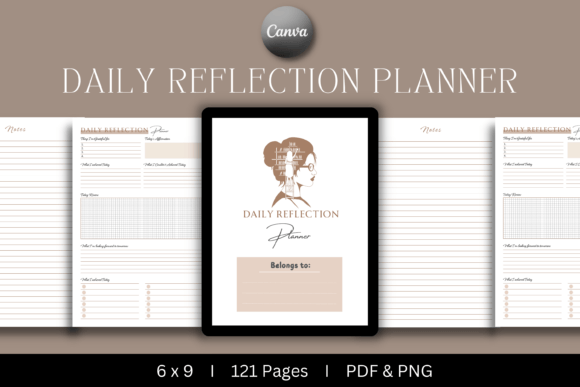
Unlike a blank notebook or a simple lined journal, a daily reflection planner must guide a specific mental habit. Users typically expect prompts that create space for gratitude, goal review, mood tracking, or structured introspection. The best interiors balance enough structure to reduce the “blank page” anxiety with enough flexibility to accommodate different thinking styles. When evaluating any pre‑designed interior – including the one we’re looking at here – pay attention to whether the layout feels calm and repeatable across dozens of entries. Consistency in margins, section spacing, and font hierarchy often separates a professional feel from something that seems thrown together. The Daily Reflection Planner KDP Interior is built around this idea: repeatable daily pages, plus a welcome page and dedicated notes sections, creating a rhythm without overwhelming the user.
Ready‑Made vs. DIY: Where This Product Lands
Many sellers face a choice between designing their own interior from scratch and buying a commercially available template. Designing yourself gives you full control over creative decisions – every line weight, every prompt, every margin. But it also demands a working knowledge of typography, margin rules for KDP (especially bleed requirements), and the patience to test print layouts across multiple devices. A ready‑made option like the Daily Reflection Planner KDP Interior drastically shortens the timeline. Because it ships as a print‑ready PDF that’s already been KDP tested, the main risk – file rejection due to technical issues – is largely removed. However, you give up uniqueness. Other sellers may use the same interior, so your product’s visual identity will share DNA with others in the marketplace.
When Custom Design Makes More Sense
If you’ve developed a very specific journaling methodology or want a completely branded experience from cover to interior, a pre‑made template may feel restrictive. Designers familiar with KDP can still build your vision from scratch for a higher upfront cost and longer turnaround. For sellers testing a niche or launching their first few products, though, the speed and reliability of a tested interior often outweigh the lack of bespoke styling. The key is recognizing that the interior is not the only differentiator – your cover design, title, subtitle, and listing optimization all contribute heavily to visibility. The Daily Reflection Planner KDP Interior works well in a portfolio approach where you want to release several related planner types quickly and learn what resonates.
File Format Flexibility and Practical Editing Options
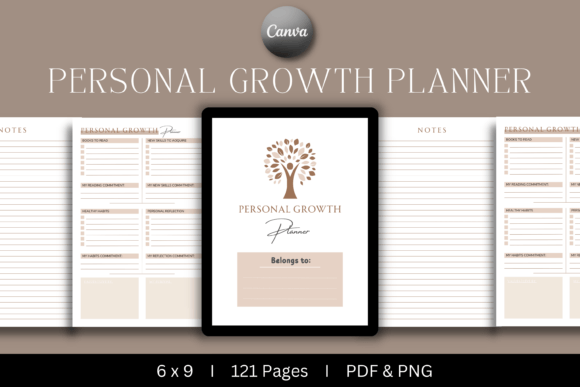
One distinguishing factor with this product is the range of included file types. The core deliverable is a 121‑page ready PDF, but you also receive a PNG file, a PowerPoint file, and an editable Canva template link. For sellers who like to tweak prompts or add a personal touch, the Canva link (requiring a Pro account) opens the door to on‑screen editing without specialized software. The PowerPoint file appeals to those already comfortable with that environment. This multi‑format approach contrasts with products that deliver only a locked PDF, leaving no room for customization. Still, editing a template comes with its own learning curve. Adding pages or rearranging sections may disrupt the carefully set margins or bleed areas, especially since the interior uses a 6×9‑inch trim size with bleed. A small adjustment in Canva can unintentionally shift elements near the edge, leading to trimming issues. If you plan to modify, build in time for a test print.
Page Count and User Perception of Value
With 121 pages, the interior sits in a comfortable range for a daily reflection journal. On KDP, page count directly influences printing cost and, by extension, your royalty calculation. A book that feels substantial but not unwieldy typically lands between 110 and 130 pages for a daily format. The inclusion of an introductory welcome page and a dedicated notes section adds perceived value without inflating costs disproportionately. Some planners in this category push 150 or more pages, but users may be more likely to abandon a thicker book before completing it. The Daily Reflection Planner KDP Interior strikes a balance that keeps the physical product portable while giving enough breathing room for a meaningful daily practice over several months.
Strengths That Stand Out in Daily Use
When you look at the interior design itself, a few practical strengths emerge. The layout is intentionally clean so that daily reflection – not decoration – takes center stage. Many competing interiors over‑design with heavy graphics that distract or take up too much toner when printed. Here, the minimal approach also makes the planner more usable across different ink and paper settings. Since KDP offers cream or white paper, simple black‑and‑white interiors tend to reproduce more reliably. The Daily Reflection Planner KDP Interior leans into that simplicity, which increases the odds that your customer reviews won’t complain about faint printing or cluttered pages.
Another strength is the KDP‑tested claim. Amazon’s print‑ready checker can flag issues like insufficient margins, wrong trim size, or images too close to the edge. A file that has already passed this step saves you an entire round of troubleshooting. That alone is a meaningful time advantage, especially if you’re publishing multiple interiors in a week.
Tradeoffs You Shouldn’t Ignore
No interior is a perfect fit for every audience. A daily reflection planner designed for broad appeal may feel too general for a niche that requires highly specific prompts, such as one built around a spiritual tradition, a particular twelve‑step program, or a coaching framework. Because the prompts are fixed in the template, you either accept them as they are, or you invest time editing them. For some sellers, that editing defeats the purpose of buying a pre‑made interior. Additionally, while the product includes an editable Canva template, it requires a Pro account – an extra cost barrier not explicitly stated in all product listings. A beginner counting on free tools only might find themselves stuck if they skip the fine print.
Also note that the interior is optimized for 6×9 inches with bleed. If you wanted to offer the same planner in, say, 8×10 or 5×7, you would need to reformat entirely. The template doesn’t automatically scale cleanly to other sizes, so your store lineup will live in one trim dimension until you create alternatives.
Comparing to Other Planner Interior Sources
Marketplaces beyond the one hosting this product also offer KDP planner interiors. Some come from designers who specialize in low‑content books and offer dozens of variations – daily reflection, self‑care journals, finance logs – often with a more cohesive branding kit. Others are from generalist graphic design shops where the KDP‑specific bleed and margin requirements might not be as rigorously tested. What tends to set the Daily Reflection Planner KDP Interior apart is the focus on a single, polished format rather than a bundle that promises “500 interiors” but delivers inconsistent quality. The tradeoff is that you don’t get a matching set of, say, a weekly planner and a habit tracker in the same style; you’d need to source those separately and hope they visually align.
Another alternative is using free Canva templates and building your own. The barrier here is time and the placement of elements within safe zones. Free templates often lack bleed settings tuned for KDP, so new publishers sometimes face print rejections. A purchased interior that’s already been tested typically avoids that hidden cost of learning.
Who Benefits Most from This Interior?
The sweet spot is the publisher who wants to enter the daily journaling space quickly, with minimal friction, and who values technical reliability over bespoke design. If you already have a cover design concept and know your target keyword cluster, this interior lets you upload and go live within a day (assuming your cover file is also ready). It’s also a solid choice for those running experiments: launch two or three reflection planners with slightly different cover aesthetics and see which one gains traction, knowing that the interior quality won’t be a variable that skews the results.
On the other hand, if your brand is built around a distinct visual voice – watercolor accents, a particular typeface, or a layout that alternates between built‑in habit trackers and long‑form reflection – you’ll likely feel the constraints of any pre‑made interior. In that case, investing in a custom layout or a more modular set of editable master pages might be a better long‑term play.
Key Decision Factors When Evaluating Similar Interiors
If you are comparing the Daily Reflection Planner KDP Interior against others, keep a short checklist in mind. First, verify that the seller explicitly states that the file has been KDP tested. Not every “print‑ready” PDF actually passes Amazon’s checks without adjustments. Second, look at the included file types. A PDF alone limits your ability to correct a typo or tweak a prompt; access to an editable source file adds flexibility without requiring you to buy a whole separate service. Third, confirm the trim size and bleed settings match your intended paperback format. Fourth, scan the page layout for a balance between daily reflection prompts and supplementary pages like a welcome page or notes section – these extras can elevate a customer’s unboxing experience without dramatically increasing production cost. Finally, think about how you’ll present the product. Even an excellent interior will underperform if the listing doesn’t clearly show the interior layout. The fact that this product includes PNG files means you can easily create high‑quality “look inside” images for your product page, which is a practical bonus many buyers overlook.
What the “Welcome Page” and “Notes” Sections Add
A planner that jumps straight into daily entries can feel transactional. Including a welcome page gives the end user a gentle entry point – a place to record their name, starting date, or a personal intention. Notes pages at the back act as a spill‑over for longer entries, habit observations, or monthly summaries. From a publishing standpoint, these elements require little extra design effort but significantly enhance the perceived completeness of the product. The Daily Reflection Planner KDP Interior incorporates both, which sets it slightly ahead of bare‑bones competitors that offer only a repeating daily page grid.
Moving from Evaluation to a Publishing Decision
No one interior will suit every seller, but the Daily Reflection Planner KDP Interior occupies a sensible position for a wide range of KDP beginners and intermediates. It reduces technical risk, supports light customization via Canva and PowerPoint, and provides a clean, repeatable structure that matches what many daily journal buyers expect. The main limitation you should weigh is whether you are comfortable sharing a core product design with others in the marketplace. Ultimately, the product you list on Amazon is a combination of cover, interior, title, and the story you tell around it. A solid, tested interior gives you a reliable foundation; everything else – the unique angle, the niche targeting, the customer connection – still rests in your hands.