Hexagonal Graph Paper Notebook KDP Publishing Ideas
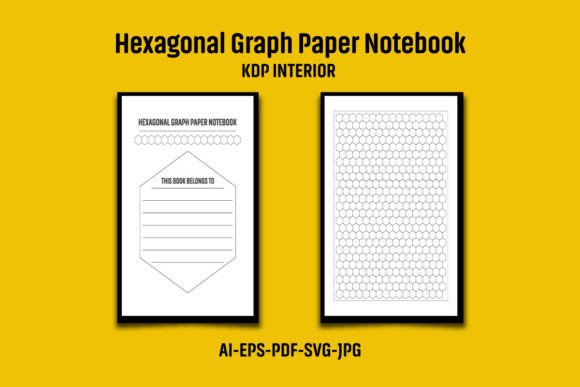
Getting a finished notebook interior ready for Amazon KDP often eats up hours of design time, especially when you need a specialized grid that's precisely aligned, bleed-ready, and formatted for print. That's exactly where a pre-built Hexagonal Graph Paper Notebook KDP interior changes the workflow. This product provides a complete 8.5″×11″ hex grid notebook template—120 pages, 300 DPI, black and white, with crisp lines and exact bleed dimensions (8.62″ x 11.25″ overall). You receive the source files in AI, EPS, PDF, SVG, and high-res JPG formats, so you can edit, recolor, and brand the interior before uploading to KDP.
But what makes hexagonal paper so compelling, and how can you turn this interior into a notebook that actually sells? The answer goes far beyond a simple grid. A hex sheet opens doors for niche audiences that square or dot grids can't serve as naturally. Let's walk through why this format matters, how to adapt the interior for real buyers, and what steps create a unique, KDP-ready product that steers clear of duplicate content issues.
Why Hexagonal Graph Paper Resonates With So Many Different Buyers
A hexagonal grid feels organic yet structured. It supports three axis directions instead of two, which gives it natural appeal for mapmaking, chemical structures, geometric art, and even game design. When you publish a notebook using this interior, you're not just selling blank pages—you're selling a tool that enables specific hobbies and professions.
Dungeon Masters and tabletop RPG fans use hex grids to build world maps and manage combat encounters with more tactical freedom than squares. Organic chemistry students and researchers can sketch molecular structures without distorted bond angles. Quilters and seamstresses draw tessellating patterns directly. Landscape designers and architects map out terrain with realistic flow. And creative bullet journalers treat hex grids as a playful framework for habit trackers, mood logs, or weekly layouts that break the square-grid monotony. That variety means your single notebook interior can spawn multiple product listings—each laser-focused on a different sub-audience—if you tweak the interior's branding and listing language thoughtfully.
Creative Possibilities That Go Beyond “Just Another Graph Notebook”
Most hexagonal notebooks on KDP look generic. A plain hex grid with a forgettable cover won't stand out. But when you understand the grid's strengths, you can align the interior layout, extra pages, and cover design with a real use case. Here are a few directions that turn the same 120-page template into distinct, valuable products.
1. The TTRPG Mapmaker's Journal
Encourage overland hex crawls. Add a few introductory pages with tips: how to assign terrain types, measure scale, and key landmark icons. Even a simple “Hex Mapping Quick Guide” in the front matter—created by you and inserted into the AI or EPS file—makes the notebook feel purpose-built. Keep the grid light gray or soft black so that pencil marks pop. This niche alone often yields loyal repeat buyers who want different regional covers.
2. Organic Chemistry Hex Template Notebook
While standard notes are fine, a dedicated notebook with hexagon shapes pre-printed saves students drawing them by hand for every cyclohexane ring. You can add a subtle “carbon skeleton” watermark or a faint ring-numbering cheat sheet on the inside cover. Market it toward STEM students, pre-med exam prep, or even professional labs. In your KDP title, include terms like “Hexagon Paper for Organic Chemistry,” which helps surface the product for targeted search queries.
3. Quilter's Design and Tessellation Pad
Quilters, especially those working with English paper piecing, plan elaborate hexagon floral motifs. They need large-format pages with clear hexes to sketch and color-code fabrics. The 8.5″×11″ size with bleed means the hex grid runs edge-to-edge, offering a full canvas. A simple addition to the interior: a numbered grid reference system so users can annotate pattern repeats. This small customization raises perceived value dramatically.
4. Gamified Bullet Journal or Habit Tracker
Not every buyer wants intense technical use. Some simply prefer the honeycomb aesthetic. You can design a few pre-formatted tracker pages within the notebook (using the AI file) that count 30 or 31 days using filled hexagons. Then leave the remaining pages blank for freeform logging. That hybrid approach—part guided, part open—often gets better reviews because it offers immediate utility without overwhelming the creative user.
How to Customize the Interior and Avoid Duplicate Content Flags
Amazon KDP actively checks for duplicate interiors. If you upload the exact same PDF that others use, your account risks rejection or flags for poor customer experience. That's why the vendor note reminds you to add your own logo or graphic. But you can go further to build a truly unique edition.
- Add a branded title page: Open the AI or EPS file in Illustrator. Place your notebook's title, your author/ publisher name, and a copyright note on the first page.
- Insert a short usage guide: Even two pages of “How to Use This Hex Notebook” with your own writing and fonts changes the file signature completely. Mention the grid size (e.g., ¼ inch hexes) so users know what they're working with.
- Subtly recolor the grid: The source files support easy color change. Switch the default black grid to a dark blue, soft gray, or even a sepia tone. This not only makes your notebook stand apart in the “Look Inside” preview but also helps differentiate it from other listings using the same base interior.
- Add a back-of-book surprise: Include a few bonus hex templates—a blank character sheet for RPGs, a sample molecular scaffold, or a tessellation challenge. These small additions, placed after the main grid pages, show that you've curated the notebook rather than just batch-uploading a template.
- Rename and re-export with care: After editing, always export a fresh high-resolution PDF at 300 DPI with bleed settings matching the interior's 8.62″ x 11.25″ overall dimensions. Double-check that your added pages don't shift the grid alignment on subsequent pages.
Build Your KDP Listing Around a Specific Audience Need
When you've tailored the interior for a niche, your product listing should reflect that focus. Generic descriptions like “hexagonal graph paper notebook, 120 pages” won't convert as well as a title that calls out a clear use. For a chemistry notebook, consider: Hexagonal Graph Paper Notebook: Organic Chemistry Hex Grid Drafting Pad, 8.5 x 11 inches, 120 Sturdy Pages for Students and Researchers. For role-playing gamers: Hex Crawl Mapping Journal: Large Print Hex Graph Notebook for RPG World Building, D&D Campaign Maps, and Wargaming Terrain.
Bullet points should connect features to the user's workflow. Instead of just stating “120 pages,” note “120 thick, double-sided pages for sustained map-making without bleed-through from markers or pens.” Mention that the hex grid faintly prints in a non-photo blue or custom gray so that hand-drawn elements dominate. Highlight that the book opens flat due to the generous dimensions. These details matter to creators who care about ease of use.
Don't forget backend search terms. Use phrases like “dnd hex map notebook,” “chemistry hexagon paper,” “hexagonal journal for quilters,” and “battle mat sketchbook.” These semantic keywords draw relevant traffic without stuffing your title.
Keep the Final Product Reader-Ready and Original
A polished notebook interior respects margins, bleed safety, and visual clarity. Because this template provides exact dimensions with bleed, you don't have to worry about trim errors—as long as you keep critical content within safe zones during customization. Avoid placing logos too close to edges; keep any frame or header at least 0.25 inches inside the trim line. Maintain consistent line weight throughout the grid. If you add text pages, use legible, professional fonts that match the cover's style. Consistency builds buyer confidence.
Originality doesn't mean overhauling the entire grid. It means that anyone who opens “Look Inside” sees evidence of your authorship: a welcome note, a quick-start diagram, a color choice that matches your cover theme. That's enough to satisfy KDP's unique content expectations and, more importantly, to make a buyer feel they've purchased something thoughtfully designed, not a mass-produced clone.
Use the Provided File Formats to Your Advantage
You'll receive a ZIP containing AI, EPS, PDF, SVG, and two JPG files. Each serves a purpose beyond the interior itself. The vector formats let you edit cleanly at any scale; the SVG can be adapted for a companion digital product (like a printable hex grid reference sheet) if you decide to build a brand beyond KDP. The high-resolution JPG previews are handy for quick mockups on product pages or social media. But always upload the final interior as a print-ready PDF—that's what Amazon KDP expects.
If you're new to vector editing, start with the AI or EPS file in a compatible version (CS6 is noted, but modern Illustrator versions open them fine). The “easy to color change” feature means you can select the grid layer and apply a new stroke color in seconds. For those without Illustrator, Inkscape (free) can open SVG files and export a clean PDF—just verify the output resolution stays at 300 DPI.
Scaling Your Notebook Business With Minimal Effort
Once you've created one successful hex grid notebook, the interior template can power a series. Change the cover design and tweak a few interior pages to match each niche. For example, the same base grid can serve as a “Hexagonal Sketchpad for Game Designers,” a “Bee-Themed Bullet Journal,” or a “Mineral Crystallography Lab Notebook.” Each variation targets a different micro-audience, with only minor alterations to the interior. Over time, this builds a catalog of complementary products that share a common quality but feel personal to each buyer group.
Use the “easy color change” wisely. A dark grid works best for pen users; a soft, warm grid appeals to bullet journal enthusiasts who layer washi tape and marker. Test different shades in print-on-demand proofs to see which one yields the best customer experience. Even the paper color (white vs. cream) can be a selling point, though KDP's standard white paper keeps it simple.
Finally, remember that every page counts. At 120 pages, the notebook is substantial enough for long-term projects. Avoid cramming too many instructional pages; 2–6 custom pages at the front are usually enough to add value without shrinking the creative space. The rest should be clean, borderless hex grids that invite users to fill them. When the utility is clear, your notebook becomes a repeat buy—a tool someone wants to use again for a new campaign, semester, or design project.
Make the Most of a Robust Starting Point
The Hexagonal Graph Paper Notebook KDP interior is a strong launchpad, not a finished product. By layering your own creativity, branding, and user-focused additions, you transform a blank template into a niche-specific notebook that sells on its merits. From chemistry students to quilters to game masters, each audience recognizes a notebook that was made with their work in mind. That kind of thoughtful publishing—built on a professional, well-formatted base—leads to better reviews, fewer returns, and a more sustainable KDP business. Invest the small effort upfront to customize, and you'll have a product that stands as uniquely yours, even in a broad marketplace.