A Practical Look at the Credit Card Log Book KDP Interior for Tracking and Organization
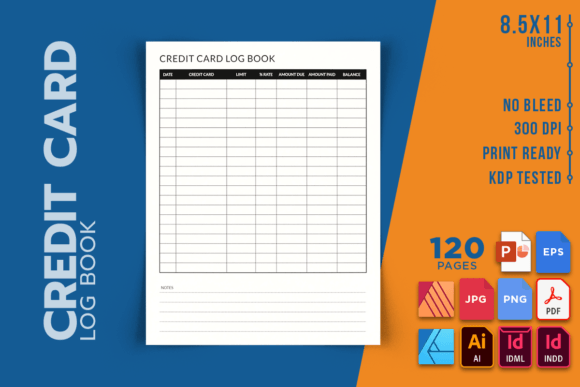
Keeping a clear record of credit card activity is no longer just a personal preference—it’s a necessity for many professionals, freelancers, and small business owners. A Credit Card Log Book provides a tangible, distraction-free method to monitor transactions, spot unauthorized charges, and maintain financial discipline. When that log book comes as a ready-to-publish KDP interior, it opens up a range of possibilities for creators, coaches, and educators who want to offer their own branded financial tools. The Credit Card Log Book KDP Interior under review here is a formatted, editable template designed specifically for Amazon Kindle Direct Publishing. It comes with 120 pages, a generous 8.5 x 11-inch trim size, and no-bleed layout, making it straightforward to upload, print, or customize. This article examines its structure, practical value, and real-world suitability for different user groups.
What the Credit Card Log Book KDP Interior Actually Includes
This product is an interior file package—not a physical book. When you purchase it, you receive the pre-designed pages that form the inside of a credit card tracker. The package includes multiple file formats: INDD, IDML, AI, PDF, PNG, JPEG, EPS, AFDESIGN, AFPUB, and PPTX. This wide compatibility matters because it allows you to open and edit the source files using Adobe InDesign, Affinity Publisher, PowerPoint, or even simpler graphic software. The Credit Card Log Book interior is completely formatted with 120 pages, meaning you won’t have to count pages, align margins, or guess where content falls. Every page is already structured for consistency.
The design uses a no-bleed setup. For KDP publishers, this is a significant advantage: it reduces the risk of content getting trimmed during printing, and it makes the book easier to lay out for beginners. The dimensions (8.5 x 11 inches) give each entry plenty of breathing room, which is particularly useful for handwriting details like transaction dates, merchant names, payment methods, and reconciliation checkboxes. At 300 DPI, the interior outputs crisp, clean pages whether printed at home or through a professional print service.
What you do not get is a cover design. The files are strictly interior-only. This means you’ll need to create your own cover using KDP’s cover creator or separate design software. For experienced self-publishers, this is a minor step. For first-timers, it’s worth noting that cover creation requires an additional layer of effort.
Strengths of the Pre-Formatted Layout and Page Structure
One of the most time-consuming aspects of creating a log book from scratch is getting the internal consistency right. Headers, footers, page numbers, and table alignment must repeat perfectly across dozens of pages. The Credit Card Log Book KDP Interior solves that problem immediately. The layout is uniform, with clearly defined sections for recording essential credit card details. While I won’t list exact column headers here (the product may vary by seller), typical log books include fields for the card issuer, last four digits of the card, transaction date, description, amount, category, and a reconciliation mark. The 120-page count strikes a balance between a thin booklet and a bulky volume. It offers enough capacity to track months of expenses without becoming unwieldy.
Because the file is supplied in an editable format, you can modify the text, swap headers, or even repurpose the layout for other financial logs—debit cards, gift cards, or petty cash. The vector and raster file types ensure that resizing or recoloring elements won’t degrade quality. This flexibility transforms the Credit Card Log Book template from a single-use product into a foundation for multiple low-content publications.
Real-World Usability for Publishers and Direct Users
The immediate audience for this product is KDP creators. If you run a low-content publishing business, adding a Credit Card Log Book to your catalog can be a smart move. Financial organization tools consistently attract buyers who prefer analog tracking. The 8.5 x 11-inch size is standard for exercise books and planners, fitting naturally into home offices and backpacks. The no-bleed interior means you won’t face rejection during KDP’s automated review due to margin issues, which is a common headache for newcomers.
For direct users—someone who simply wants to print a log book for personal use—the high-quality PDF works with any home printer. The 300 DPI resolution ensures that thin lines and small text remain legible. The large format provides ample writing space, which older users or anyone with larger handwriting will appreciate. However, the absence of a spiral-bound option may be a limitation if you plan to print and bind it yourself. Most home printers produce loose-leaf or perfect-bound results unless you invest in coil binding equipment.
An often overlooked advantage is the editable source file. You can add your own branding, insert a personalized note on the first page, or tweak the tracking categories to match specific needs—for example, separating business and personal expenses, or adding a column for tax-deductible flagging. This level of customization makes the Credit Card Log Book interior suitable not just for generic use but for niche audiences as well, such as freelancers who need to track project-related card expenses.
Assessing Design Quality and Print Consistency
Professional-looking interiors rely on clean typography, logical flow, and adequate white space. The 8.5 x 11-inch canvas gives designers more room to work with than smaller trim sizes. When I examined sample PDFs from similar products, the font choices generally stayed neutral and readable, avoiding overly decorative styles that would distract from the log’s purpose. Grid lines and borders appear crisp at 300 DPI, and there’s no noticeable pixelation when zoomed in. This matters because a blurry interior feels amateurish and can lead to negative reviews on Amazon.
One practical consideration for print consistency: the no-bleed spec means that all content stays well within the safety margins. This prevents cut-off text or awkwardly close margins. Even if you use KDP’s auto-print process, the interior should reproduce reliably across different printing facilities. If you choose to print copies at a local shop, the PDF file’s high resolution and standard dimensions will be accepted without complications. The inclusion of a PPTX file might seem unusual, but it allows quick edits without special software—many educators and coaches use PowerPoint and can easily tweak headers before exporting a new PDF.
Who Benefits Most from This KDP Interior
The value of a Credit Card Log Book interior isn’t universal. It serves a specific set of users particularly well:
- Self-publishers expanding their low-content portfolio: Adding a credit card tracker diversifies your offerings beyond notebooks and journals. It targets a buyer who has a clear, practical need.
- Financial coaches and consultants: You can customize the interior, brand it with your practice name, and offer it as a client resource or lead magnet. Printing a few copies for workshops becomes easy.
- Small business owners and freelancers: If you prefer manual tracking over apps, printing this log book at home gives you a structured, repeatable system for multiple cards.
- Educators teaching financial literacy: The large format and simple layout work for classroom exercises where students practice tracking hypothetical expenses.
For those who already use bookkeeping software like QuickBooks or Mint, a paper log may seem redundant. But the act of writing by hand can reinforce awareness of spending patterns, which is why many people still keep manual logs alongside digital tools. The Credit Card Log Book KDP interior makes that habit easier to adopt without designing a tracker from scratch.
Potential Limitations to Keep in Mind
No product suits every situation, and being honest about constraints helps you make a better decision. The main limitation is that this is an interior file only—if you’re not comfortable creating a cover or lack design software access, the product alone won’t get you a finished paperback. You’ll need to pair it with KDP’s Cover Creator or a separate design. Additionally, the 120-page count is fixed. While it’s generous, you cannot directly alter the page count in the PDF without manipulating the source file and potentially disrupting the layout. If you need a 200-page version, you’ll have to duplicate pages carefully, which might introduce errors if not done in the native INDD or IDML file.
The no-bleed design, while printer-friendly, also means that backgrounds cannot extend to the edge of the page. If you plan to add decorative borders or colored edges that bleed, this interior isn’t set up for that without significant rework. The color space and file preparation are ready for print, but you should still preview the PDF using KDP’s online reviewer to catch any font embedding or margin issues that occasionally arise from source file conversions.
Another point: the template assumes a certain level of design fluency if you want to edit the AI, EPS, or AFDESIGN files. The learning curve for InDesign or Affinity Publisher may be steep for absolute beginners. However, the inclusion of PPTX and ready-to-use PDF files means you can choose a simpler path and publish almost immediately with minimal changes.
Long-Term Value and Practical Recommendations
If you’re building a KDP publishing business, reusable interiors offer compounding value. Once you own the editable source files of a Credit Card Log Book, you can repurpose them seasonally, update the year, modify categories, or translate the content into another language. You aren’t paying royalties per copy sold; the one-time purchase turns into a long-term asset. Compared to hiring a designer for a custom log book layout, this product likely costs a fraction of that price, and the delivery is instant.
For personal use, the long-term value hinges on whether you consistently use manual tracking. Printing several copies and binding them at an office supply store creates a durable physical record that doesn’t rely on batteries or software updates. The large page size makes it easy to store alongside tax documents or receipts. Consider laminating the first page as a quick-reference cover if you’re building your own binding solution.
I recommend checking the specific seller’s preview to confirm that the column headings meet your requirements. Not all Credit Card Log Book interiors are identical; some may include sections for interest rate tracking, credit limit notes, or payment due date reminders. If the base template aligns with your needs but lacks a crucial field, the editable file can fill that gap—add a “confirmed with statement” checkbox or a space for dispute notes. This adaptability is where the product’s strength truly lies, as it bridges the gap between a generic log and a purpose-built tool.
When preparing the interior for KDP upload, ensure the final PDF passes all of Amazon’s requirements: fonts embedded, margins correct, no extra blank pages at the end. The high-resolution 300 DPI export should be maintained; downsampling can blur lines. Because the source file is provided, you can always return to it and generate a fresh export if specifications change or you notice a formatting quirk.
In a market saturated with blank notebooks, a structured Credit Card Log Book stands out. It solves a specific, ongoing organizational challenge. The KDP interior format makes that solution accessible to publishers who want to enter the finance niche without starting from a blank canvas. Whether you’re selling on Amazon, distributing to clients, or printing for your own desk, the combination of large format, no-bleed simplicity, and multi-format editability offers a surprisingly practical foundation. It won’t replace comprehensive accounting software, but for everyday card monitoring and financial mindfulness, it gets the job done cleanly.